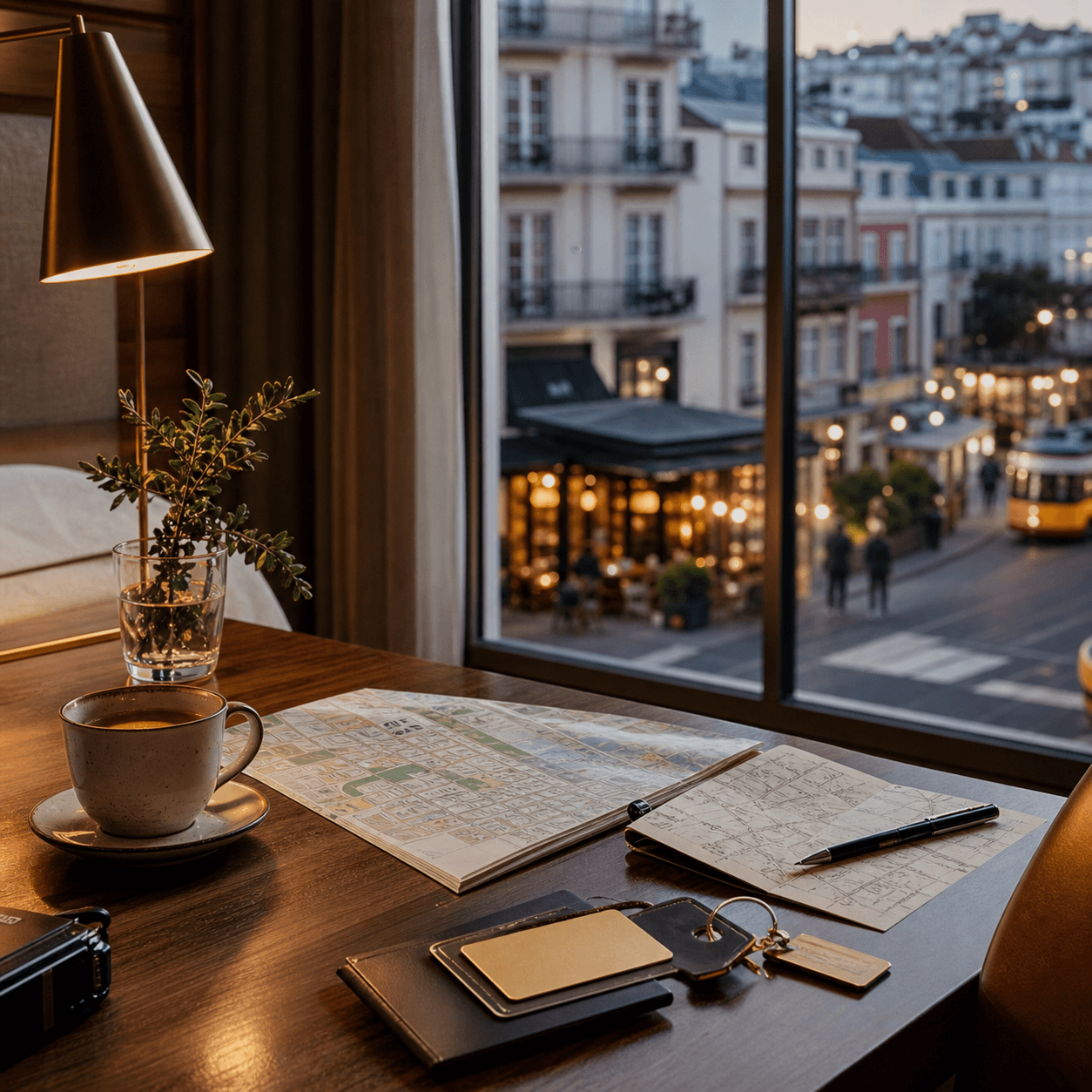
You stay in a neighborhood
Count the hours: you sleep in the room, but you live in the streets around it. Breakfast, the walk home after dinner, the pharmacy run, the one bar you end up returning to three times — all neighborhood. A brilliant hotel in a dead business district gives you a beautiful room and a taxi bill; a modest one on the right square gives you the trip you actually imagined.
In Lisbon, the choice between Baixa and Alfama is not a price decision — it is a pace decision: flat, central, and busy versus steep, quiet, and atmospheric. In Rome, Trastevere and the streets around Termini can cost the same per night and deliver opposite holidays. The hotel listing will not tell you this. The map will.
Three tests for a base
Before falling for photographs of a lobby, run the neighborhood through three filters that predict daily happiness far better than amenities do:
- The walk-home test: after dinner and wine, is the way back a pleasant fifteen-minute walk through streets you would enjoy — or a metro ride with a transfer?
- The breakfast radius: are there three places you would happily start a morning within five minutes on foot? Hotel breakfast is a fallback, not a plan.
- The transit fit: for day trips, does the neighborhood connect to the station you will actually use — not the city's main one, the one your itinerary needs?
Matching the base to the traveler
This is where a taste profile earns its keep. Nightlife-first travelers should pay for centrality and accept noise; early-morning walkers should buy quiet and accept a hill. Food-driven travelers belong near markets, not monuments — monuments close at six, markets open at seven.
When Pardal recommends a stay, the neighborhood is the argument: this quarter matches your evening energy, this street puts your kind of breakfast downstairs, this location turns your two day-trips into direct trains. The hotel is the answer; the neighborhood is the reasoning.